
Basement Waterproofing in Indianapolis, IN
Basement waterproofing that gives the water somewhere to go
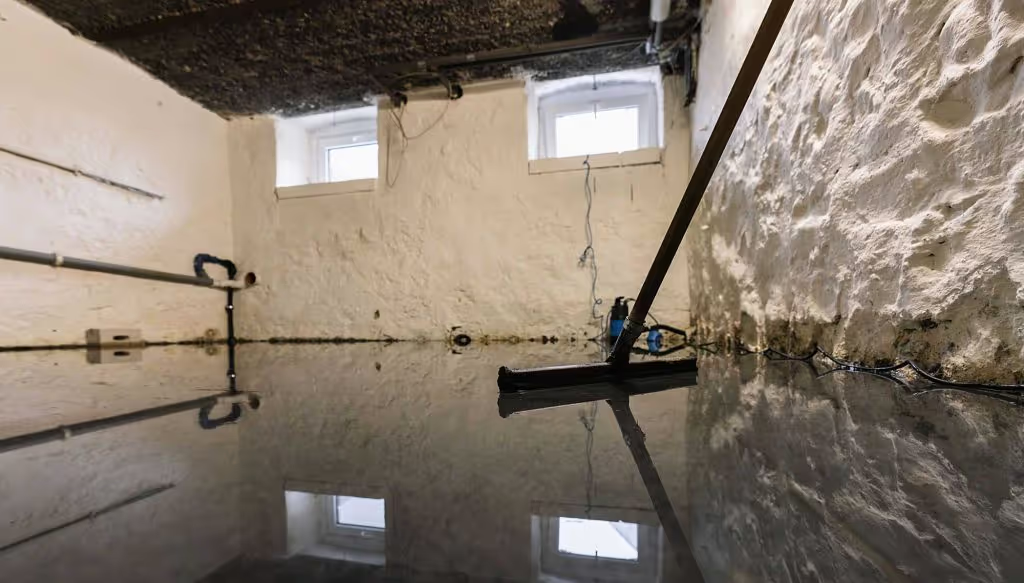
Water stains, musty odors, white efflorescence on the block, visible leaks after every hard rain. Paint and patch products never hold, because the problem is hydrostatic pressure outside the wall. We relieve it at the footing, pump it away, and seal what's left, then handle the mold, the bowing and the radon while we're down there.
Typical price$3,000 – $8,000+most projects · free inspection, written priceWater stains, musty odors, efflorescence and visible leaks
Those four signs are what we look for first, and they rarely appear alone. A chalky white bloom on block means water has been moving through the wall long enough to leave mineral deposits behind. A musty smell means humidity is already high enough for microbial growth. Both are telling you the same thing the puddle on the floor is: the soil outside is holding water against your foundation.
The fix is a complete system. A combination of footing French drains, sump pumps, vapor barriers, and sealing is what actually keeps an Indiana basement dry and it's the first step before any remodel, because a dry basement is finishable space and a strong selling point when you sell.
French Drain System
An interior footing French drain is the backbone of a real waterproofing system. We open the slab at the perimeter, set perforated pipe in washed stone at the footing, and give the water a path to the sump before it ever reaches your finished floor. Because it intercepts water at the lowest point, it relieves the hydrostatic pressure that pushes through the wall-floor joint and block cores in the first place.
- Perimeter drain tile set at the footing in washed stone
- Block cores weeped so water in the wall can drain out
- Piped to a sealed sump basin and discharged away from the house
- Concrete restored flush and clean before we leave
Sump Pumps
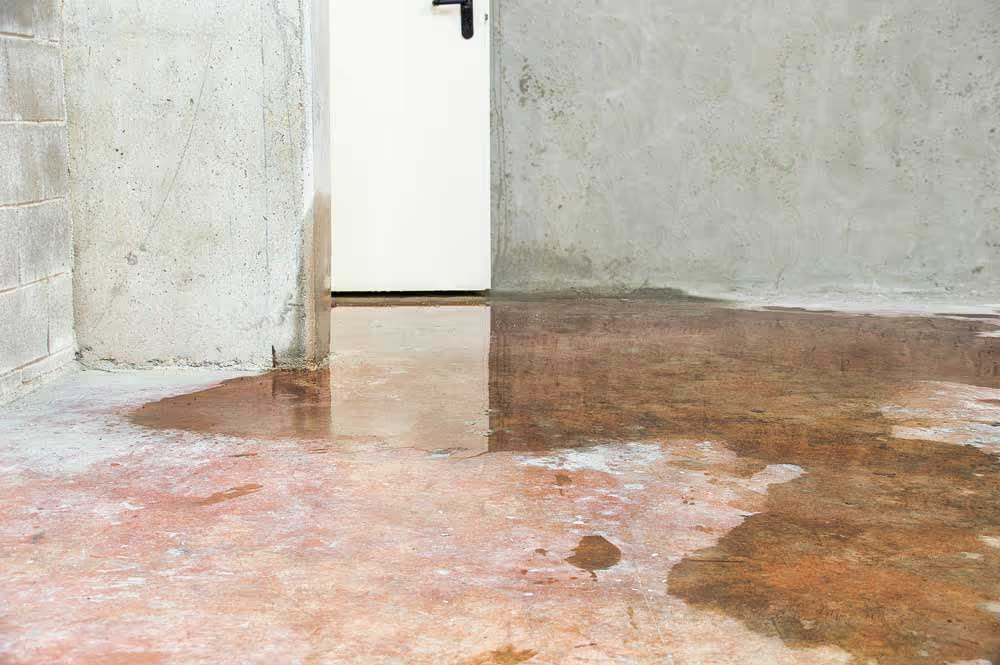
A drain system is only as good as the pump that empties it. We size the pump to the water volume your basement actually sees, set it in a sealed basin, and run the discharge far enough from the foundation that it isn't recycling the same water back to the footing. Where a failure would be expensive, we add battery backup, because the storm that knocks out your power is the same storm that fills your basement.
Correctly sized primary pump
Matched to your water volume and head height, in a sealed basin with a check valve.
Battery backup available
Keeps pumping through the power outage that usually accompanies heavy storms.
Discharge routed properly
Water leaves the property and stays clear of the footing drain.
Sealed lid for radon & humidity
An open sump pit is a moisture and soil-gas entry point. Ours are sealed.
Mold Remediation
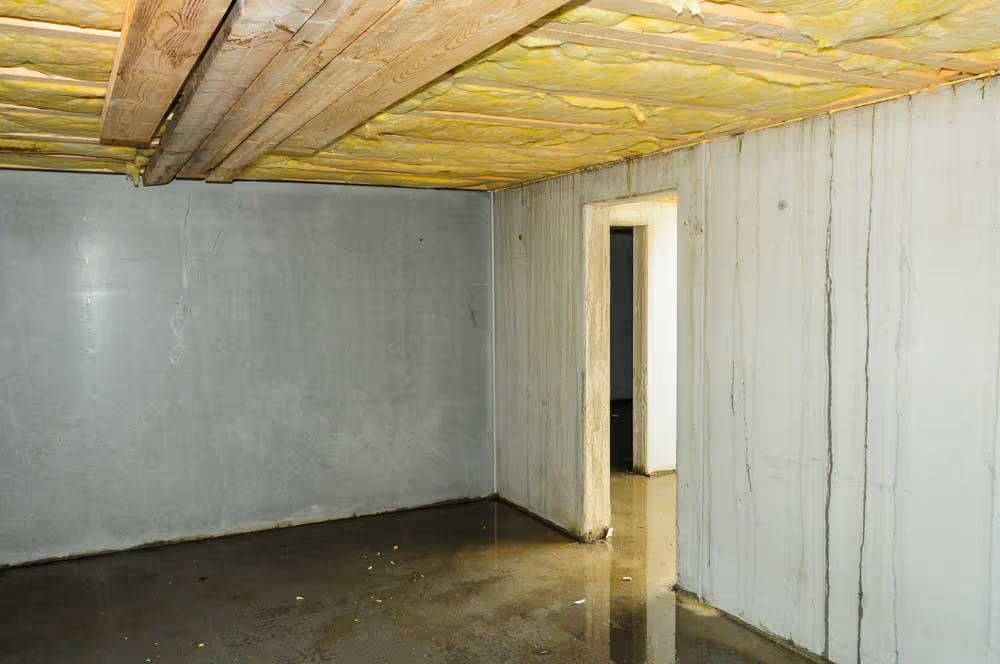
Musty smells, visible spots, or health symptoms like allergies are how most homeowners find it. We test for mold before and after remediation, contain and remove the growth, and restore affected areas and materials to pre-mold condition. Whether it's safe to stay in the home during cleanup depends on the severity, and we'll help you make an informed decision.
Remediation without fixing the water source is money spent twice. That's why mold work here is paired with drainage and vapor control: by eliminating moisture sources, we reduce the risk of it coming back.
- Mold testing before & after
- Containment & removal
- Moisture source correction
- IICRC certified
Wall Vapor Barrier
Concrete and block are porous. Even with drainage in place, moisture keeps moving through the wall as vapor, feeding humidity and staining anything you put against it. A wall vapor barrier caps that transfer: a durable liner is fastened to the wall and tied into the drainage system below, so any water that does get through the wall runs down the back of the barrier and into the drain, keeping your floor dry.
Why it matters before you finish the basement
Framing, insulation and drywall against bare block is how a finished basement turns into a mold problem three years later. Waterproofing and a vapor barrier are the first step before remodeling. Get them right and you can finish the space with confidence.
- Blocks vapor transfer through block and poured walls
- Drains to the footing system, keeping the floor dry
- Brightens the space and gives a clean finished look
Bowed Wall
A basement wall that bows or leans inward is carrying lateral load it wasn't built for: soil pressure, water damage, or settling over time. Unlike a stain or a smell, this one gets worse on a schedule you don't control, and the repair gets bigger the longer the wall moves. Even small cracks can indicate a bigger structural issue.
We stabilize with wall anchors or carbon fiber straps depending on the wall type, the amount of deflection and the access outside, then address the water that caused the pressure. Many of our foundation repairs come with lifetime warranties.
Wall anchors
Steel plates tied to earth anchors set out in stable soil, tightened to hold the wall and, in many cases, recover some of the deflection.
Carbon fiber straps
Bonded to the wall face with no exterior excavation and no hardware in the yard, ideal where access is tight or the finish matters.
Drainage relief
Stabilizing the wall without relieving the water pressure behind it treats half the problem. We handle both in one scope.
Radon Mitigation
Radon is a radioactive gas that can cause lung cancer over long exposure, and it's common in Indiana, especially in basements and crawl spaces, though slab-on-grade homes should also be tested. We test with professional-grade detectors over 48+ hours, then design a mitigation system for your home if levels warrant it.
If you already have a vapor barrier, that helps, but a radon mitigation system may still be needed. Compared to the health risk it prevents, mitigation is cost-effective.
More on radon testing & systemsTesting
Professional-grade detectors, 48+ hours, documented result.System installation
Sub-slab depressurization sized and routed for your home.Vapor barrier
Sealing the soil surface so the system can do its job.Retest to confirm
We verify the reduction with a follow-up test.
Basement Waterproofing near you
Bartholomew County
Brown County
Greene County
Henry County
Howard County
Jackson County
Jennings County
Lawrence County
Montgomery County
Morgan County
Orange County
Shelby County
Tippecanoe County
Tipton County
Vermillion County
Vigo County
Wayne County
Basement waterproofing questions
How much does basement waterproofing cost in Indianapolis?
Most of our basement waterproofing projects around Indianapolis run $3,000 to $8,000, and more for a full perimeter system in a large or finished basement. Interior drain systems are priced largely by the foot. National cost guides put them at about $60 to $100 a linear foot, so how many walls leak matters more than the size of the house. The pump, a battery backup and any finished wall that has to come down move it too; your written price comes after a free inspection.
How much does it cost to replace a sump pump?
Replacing a pump in an existing pit typically runs $500 to $1,500, depending on the pump, the check valve and discharge piping, and whether a battery backup goes in at the same time. A new pit costs more, because the floor has to be cut open and a discharge line run outside.
How long does a basement waterproofing job take?
Most interior drain systems go in within a few days, depending on how many walls are involved and how much has to be moved out of the way. The floor is cut open along the walls, so expect noise and some dust while the crew is there; the concrete is restored flush before they leave.
Do I need a battery backup sump pump?
If a failed pump would flood a finished room or anything you can’t easily replace, yes. The storm that knocks out your power is often the same storm that fills the pit, and a primary pump can’t run without power. National cost guides put the backup unit itself at about $150 to $250, plus installation.
Where should my sump pump discharge?
Outside, and far enough from the house that the water can’t run back to the foundation; a line that empties beside the wall just sends the same water around again. It shouldn’t run onto a neighbor’s yard or across a sidewalk where it will freeze, and the line needs to be routed so it can’t freeze shut in winter.
What’s the difference between a French drain and a sump pump?
They’re two halves of one system. The drain is perforated pipe in washed stone at the footing that collects the water and relieves the pressure on the walls; the sump is the sealed pit it runs to, and the pump lifts that water out of the house. A pump without a drain only handles the water that happens to reach the pit.
What are signs my basement needs waterproofing?
Water stains, musty odors, wall efflorescence, and visible leaks.
What's the best waterproofing system?
A combination of footing French drains, sump pumps, vapor barriers, and sealing.
Can waterproofing prevent mold growth?
Yes, by eliminating moisture sources, we can reduce mold risk.
Will waterproofing increase my home's value?
Yes, a dry basement is a strong selling point.
Can I finish my basement after waterproofing?
Absolutely, it's often the first step before remodeling.
What causes bowing walls or foundation cracks?
Soil pressure, water damage, or settling over time.
Typical prices for every service are in the Indianapolis cost guide, and general questions are on the FAQ page.