
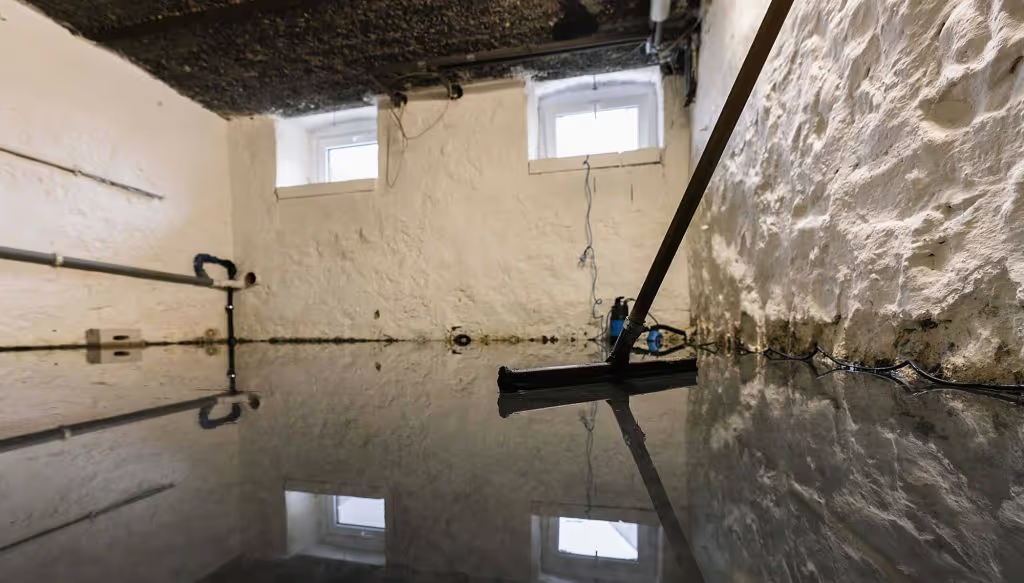
Basement Waterproofing in Thorntown, IN
Small-town basement, big pressure from wet Boone County clay
Thorntown is a small town in northwest Boone County, a few miles from Lebanon and close to Sugar Creek. It has an old downtown, a park, and blocks of older homes, many from the early 1900s or before, surrounded by flat farm ground. As Indianapolis spreads north through Zionsville and Whitestown, more people are finding Thorntown, but much of the housing is still the original stock with original basements. Newer homes on the edges of town have poured walls and many have sump pits already, while the older houses near the center were built with whatever drainage was usual a century ago.
Basement Waterproofing for Thorntown homes
Those basements sit in heavy Boone County clay. The clay stays wet for days after rain, swells, and pushes against the walls, then shrinks away in a dry summer. In Thorntown we see seepage at the floor joint, damp block, stair-step cracks and some walls that lean in. Stone and old block foundations near downtown leak through the mortar joints. On flat lots, water from downspouts and the yard settles right against the house. Peeling paint, white crust on the block and a musty smell are the usual early signs in an older Thorntown basement, well before water ever stands on the floor.
Our inspector comes up from Indianapolis and looks at the outside first: gutters, downspouts and grading. Then each wall and the floor inside. Most Thorntown basements get an interior French drain along the footing and a sump pump with a discharge line carried away from the house. A wall vapor barrier handles damp walls, and bowed walls get repaired by our own crew as part of the same plan, all on a written price. If a radon test comes back high, we can add mitigation to the same plan, and financing is available to spread out the cost of the work on your Thorntown home.
What basement waterproofing in Thorntown involves
Every Thorntown basement gets the same starting point: find where the water comes in, then decide which of these it needs. Most homes need two or three of them, rarely all four.
Interior French drain
A drain channel along the inside of the footing collects water at the wall and floor joint and carries it to a sump.
Sump pump and discharge
A properly sized pump in a sealed basin, with the discharge line routed away from the house so it stays clear in winter.
Wall vapor barrier
A heavy liner on the walls directs seepage down into the drain and keeps the basement drier and easier to finish.
Bowed wall repair
Walls that wet clay has pushed inward are braced or anchored so they stop moving, as part of the same job.
From the first call to a dry, solid house in Thorntown
- 01
You call, we schedule
Someone at our Indianapolis office picks up and books your free inspection while you are on the phone.
- 02
Free on-site inspection
An inspector walks the Thorntown property inside and out: basement or crawl space, grading, gutters and the lot. You see what they see.
- 03
A written price, explained
Scope, method and cost in writing, with financing options. Take the time you need to decide.
- 04
Our crew does the work
Michaelis employees do the job start to finish, clean up behind themselves and stay a phone call away afterward.
Basement Waterproofing questions from Thorntown
Our house in Thorntown is over a hundred years old with a stone basement. Can it be made dry?
Yes. Stone foundations let water through the joints, and an interior French drain at the base collects it before it spreads across the floor. A wall vapor barrier guides wall moisture into the drain.
We just moved to Thorntown from the city and the basement gets wet every spring. Is that normal here?
Spring rain on saturated clay is the most common reason basements leak in Boone County. It's common, but it can be fixed. A drain and sump handle the spring water so it stays off the floor.
My Thorntown basement wall has a crack that leaks only after big storms. What's happening?
After heavy rain, the clay beside your foundation fills with water and pushes it through any weak spot. A crack is often where it shows. The inspector checks whether the wall has moved and plans drainage to relieve the pressure.
We live near Sugar Creek outside Thorntown. Does that raise our risk of basement water?
Being near a creek can mean a higher water table in wet seasons, depending on your lot. The inspector looks at where water enters and how often. That shapes the size of the sump and drain system.
Can you come out to Thorntown for an inspection?
Yes. Thorntown is in our service area northwest of Indianapolis, and our own crew drives out from the shop. The inspection is free with no obligation.
The paint keeps peeling off my Thorntown basement walls. Why won't it stick?
Moisture moving through the masonry pushes paint off from behind. That's a sign of ongoing dampness. Handling the water with drainage and a wall vapor barrier is what stops it.
I think there's mold behind the old paneling in my Thorntown basement. What happens next?
The inspector checks moisture behind the paneling and looks for growth. If mold is there, our remediation removes and treats it. Then the water source is fixed so it doesn't return.
Does the clay in Thorntown really push walls in, or is that an old-house myth?
It's real. Wet clay swells and presses hard against basement walls, and older block walls can bow inward over years. Bowed wall repair and drainage together handle it.
We want to sell our Thorntown home this spring. Is it worth waterproofing first?
A dry basement makes a buyer's inspection go more smoothly. If you'd rather not do the work, a written plan and price still give buyers a clear answer. A free inspection tells you where you stand.
Is financing available for a basement job in Thorntown?
Yes. Financing is available, and the written price explains each part of the job. The inspector can walk you through it.
More from Michaelis Foundation Solutions around Thorntown
Other services in Thorntown
Basement Waterproofing near Thorntown
Every part of the job is explained on our basement waterproofing page, and the towns we cover are on the service areas page.