
Basement Waterproofing in Dayton, IN
A wet basement in a small town still deserves a real fix
Dayton is a small Tippecanoe County town just southeast of Lafayette, surrounded by some of the flattest farm ground in the state. Homes here range from older two-story houses near the middle of town to newer places built for people who work in Lafayette. The land around Dayton is glacial till: heavy clay with very little slope, so rain sits in the soil beside a foundation long after the sky clears. Some of these lots were carved out of fields, and old farm tile under the ground can still carry water toward a house without anyone knowing it is there.
Basement Waterproofing for Dayton homes
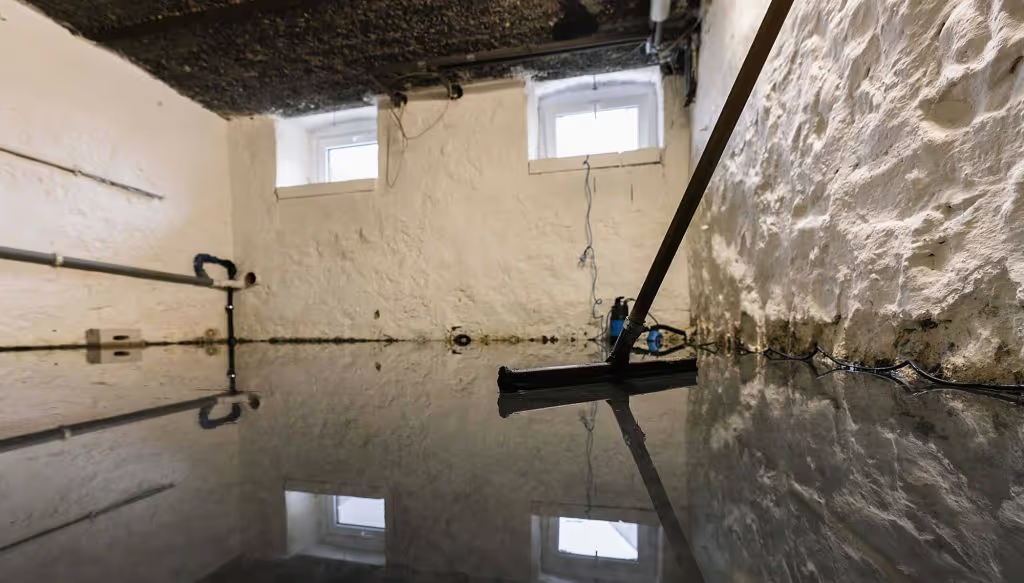
For a Dayton basement that means water pressing on the walls week after week in spring. Homeowners notice a wet floor along one wall, a sump pit that fills fast, or a block wall with a horizontal crack partway up. Older basements may have been dug shallow with little or no drain tile. Damp air in those spaces leads to mildew on stored boxes, a sour smell, and in some homes mold on the floor joists. Farther from the town center, newer basements sometimes leak at the joint where poured walls meet the floor, especially in the first few springs after construction.
We come out from Indianapolis, and the inspection is free with no travel charge. Our inspector walks the outside first to see where water collects, then checks every wall and the floor inside. Most Dayton homes we'd treat with an interior French drain and a sump pump, sized for long wet spells. Where block walls are leaning, our crew can stabilize them too, and mold remediation can be part of the same job. You get a written price that explains each part of the work, and financing is available if that helps.
What basement waterproofing in Dayton involves
Every Dayton basement gets the same starting point: find where the water comes in, then decide which of these it needs. Most homes need two or three of them, rarely all four.
Interior French drain
A drain channel along the inside of the footing collects water at the wall and floor joint and carries it to a sump.
Sump pump and discharge
A properly sized pump in a sealed basin, with the discharge line routed away from the house so it stays clear in winter.
Wall vapor barrier
A heavy liner on the walls directs seepage down into the drain and keeps the basement drier and easier to finish.
Bowed wall repair
Walls that wet clay has pushed inward are braced or anchored so they stop moving, as part of the same job.
From the first call to a dry, solid house in Dayton
- 01
You call, we schedule
Someone at our Indianapolis office picks up and books your free inspection while you are on the phone.
- 02
Free on-site inspection
An inspector walks the Dayton property inside and out: basement or crawl space, grading, gutters and the lot. You see what they see.
- 03
A written price, explained
Scope, method and cost in writing, with financing options. Take the time you need to decide.
- 04
Our crew does the work
Michaelis employees do the job start to finish, clean up behind themselves and stay a phone call away afterward.
Basement Waterproofing questions from Dayton
The fields around Dayton stay flooded for days in spring and so does my basement. Is that connected?
Very likely. Flat ground with clay soil drains slowly, so the water table near your foundation rises after long rains. An interior drain and sump pump give that water a way out before it reaches your floor.
My older Dayton house has a shallow basement with no sump pit. Can one be added?
Usually, yes. Our crew can cut in a pit, install a sump pump and connect it to an interior French drain along the walls. The inspector will check the layout and where the discharge can safely go.
I found a horizontal crack in my block basement wall in Dayton. Is this just a leak?
A horizontal crack in block often means the soil is pushing the wall inward. That's more than a leak. Our inspector will measure the wall and, if it has moved, include bowed wall repair in your written price.
We work in Lafayette but live in Dayton. Will you really drive out for a free look?
Yes. There's no travel charge for the inspection. We'll set a time that works for you and go through the whole basement.
There's mold on the joists in my Dayton basement. Do I fix the water or the mold first?
Both need attention, and the water comes first in the plan, since mold returns if the space stays damp. We can handle mold remediation and the waterproofing together so the problem doesn't come back.
My Dayton sump pump discharge just dumps next to the house. Is that okay?
Water dumped right beside the foundation often soaks back down into the same clay and returns to the pit. We route discharge lines away from the house and set them up so they don't freeze in winter.
I'm thinking of sealing my Dayton basement walls with waterproof paint. Will that work?
Coatings can cut down on dampness for a while, but they don't relieve water pressure behind the wall. Paint tends to peel once the wall pushes water through. A drain system handles the water itself.
When's a good time of year to waterproof a basement in Dayton?
Any time the ground isn't frozen solid works well, and we install year-round inside. Many people call in spring when they see the problem. Booking the inspection early gets you ahead of the next wet season.
Can you check radon in my Dayton home while you're looking at the leak?
We can talk through radon during the inspection. A test tells you your level, and if it's high, mitigation can be planned with the waterproofing work.
Our Dayton basement is unfinished and we want to make it a family room. Should we waterproof first?
Yes, before any framing or carpet goes in. Fixing water after a room is finished costs more and means tearing things out. We'll give you a plan that keeps the space dry for the long run.
More from Michaelis Foundation Solutions around Dayton
Other services in Dayton
Basement Waterproofing near Dayton
Every part of the job is explained on our basement waterproofing page, and the towns we cover are on the service areas page.