
Basement Waterproofing in Plainfield, IN
Busy suburb, wet clay and a sump that's working overtime
Plainfield is one of the bigger towns in Hendricks County, just southwest of Indianapolis, with White Lick Creek running through it and a mix of older homes near the old National Road and a great many newer subdivisions. It's close to our shop, which makes it an easy drive. The ground is the same glacial clay that sits under most of central Indiana, and the creek corridor adds wetter soil in its lower stretches. Plainfield has grown fast, and a lot of homes were built on former farm ground where the fields were once drained by tile that no longer connects to anything. That leaves water in the soil with fewer places to go.
Basement Waterproofing for Plainfield homes
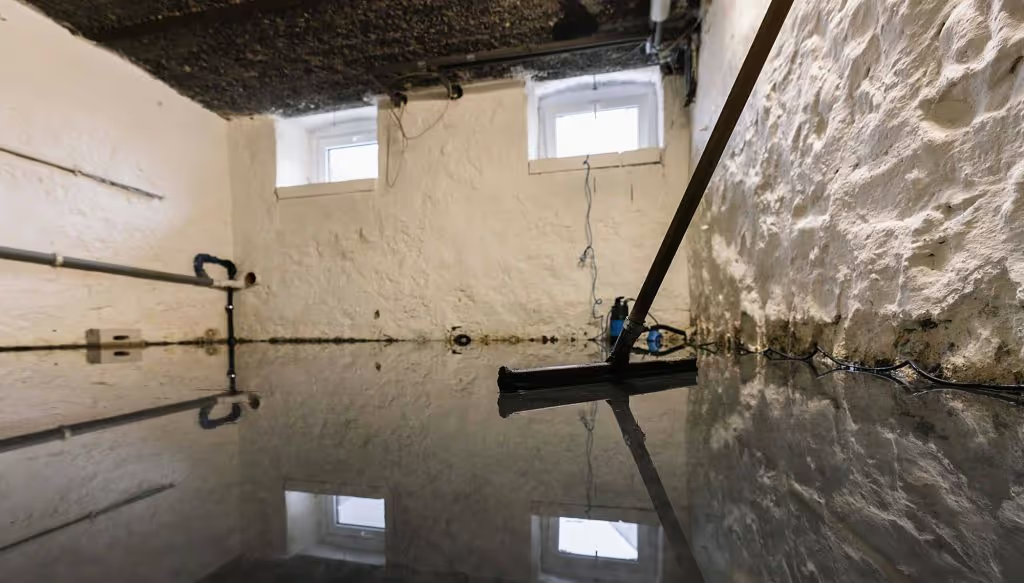
In Plainfield, we see two kinds of basement trouble. Older houses near the town center often have block walls with stair-step cracks, rust stains and a wet floor joint after storms. Newer homes have finished basements where water shows up as a damp carpet edge or a swollen baseboard. Sumps in low spots near the creek can run constantly through a wet spring. The clay also swells and shrinks with the seasons. In a dry August it pulls away from the foundation, and the first big September storm runs straight down that gap, so some Plainfield basements leak hardest at the end of summer.
Our inspector checks the outside grade and downspouts, the sump and discharge, and every wall inside. For most Plainfield homes the fix is an interior French drain along the footing tied to a properly sized sump pump. We install wall vapor barriers on damp block, clean up mold where it has started, and brace bowed walls. If your house tests high for radon, we can talk through mitigation too. Our crews are our own employees, and every Plainfield job comes with a written price that explains each part. Financing is available if you would like to spread the cost over time.
What basement waterproofing in Plainfield involves
Every Plainfield basement gets the same starting point: find where the water comes in, then decide which of these it needs. Most homes need two or three of them, rarely all four.
Interior French drain
A drain channel along the inside of the footing collects water at the wall and floor joint and carries it to a sump.
Sump pump and discharge
A properly sized pump in a sealed basin, with the discharge line routed away from the house so it stays clear in winter.
Wall vapor barrier
A heavy liner on the walls directs seepage down into the drain and keeps the basement drier and easier to finish.
Bowed wall repair
Walls that wet clay has pushed inward are braced or anchored so they stop moving, as part of the same job.
From the first call to a dry, solid house in Plainfield
- 01
You call, we schedule
Someone at our Indianapolis office picks up and books your free inspection while you are on the phone.
- 02
Free on-site inspection
An inspector walks the Plainfield property inside and out: basement or crawl space, grading, gutters and the lot. You see what they see.
- 03
A written price, explained
Scope, method and cost in writing, with financing options. Take the time you need to decide.
- 04
Our crew does the work
Michaelis employees do the job start to finish, clean up behind themselves and stay a phone call away afterward.
Basement Waterproofing questions from Plainfield
Our Plainfield house is near White Lick Creek and the sump runs all spring. Is that normal?
Homes in lower ground near a creek often see a higher water table in spring, so a sump can run a lot. What matters is whether it keeps up. We check the pump size, pit, check valve and discharge to see if it's up to the job.
I've got stair-step cracks in my Plainfield basement block walls. Are they letting water in?
Stair-step cracks in mortar joints often come from clay pressure and can let water seep through. We check whether the wall has moved and pair drainage with bracing if it needs it.
My finished basement in Plainfield has wet carpet in one corner. Where's it coming from?
Usually from the floor joint or a crack behind the drywall in that corner. Our inspector reads moisture along the walls to find the source before anything gets torn out.
We just moved to Plainfield. Should we test our basement for radon?
Testing is a good idea for any Indiana home with a basement. If levels come back high, radon mitigation can be installed, and it can share work with a sump system. Ask us about it during the inspection.
How soon can someone look at my basement in Plainfield?
Plainfield is close to our shop on W 16th Street, so scheduling is straightforward. Call and we'll set up a time for the free inspection.
Will waterproofing my Plainfield basement help when we sell?
Buyers notice water stains, smells and mold, and their inspectors flag them. A dry basement with a documented system removes a common objection. You'll have the written scope from our work to share.
I'm in Plainfield and my sump pump failed during a storm. What should I do now?
Get the water out and things dried as quickly as you can, then have the system looked at. We can replace the pump, check the pit and discharge, and talk about a backup if outages are a worry.
The basement in our older Plainfield home has a damp, earthy smell. Can that be fixed?
Yes. That smell usually means moisture in the walls or floor and often some mold. Stopping the water with a drain and sump, adding a wall vapor barrier and cleaning up mold usually clears it.
Do Plainfield homeowners need a permit for basement waterproofing?
Requirements vary, so it's best to check with your town's building department. Our inspector can tell you what the work involves so you know what to ask.
Can I finance basement waterproofing on my Plainfield home?
Yes. Financing is available, and you can go over options with the inspector when you get your written price.
More from Michaelis Foundation Solutions around Plainfield
Other services in Plainfield
Basement Waterproofing near Plainfield
Every part of the job is explained on our basement waterproofing page, and the towns we cover are on the service areas page.