
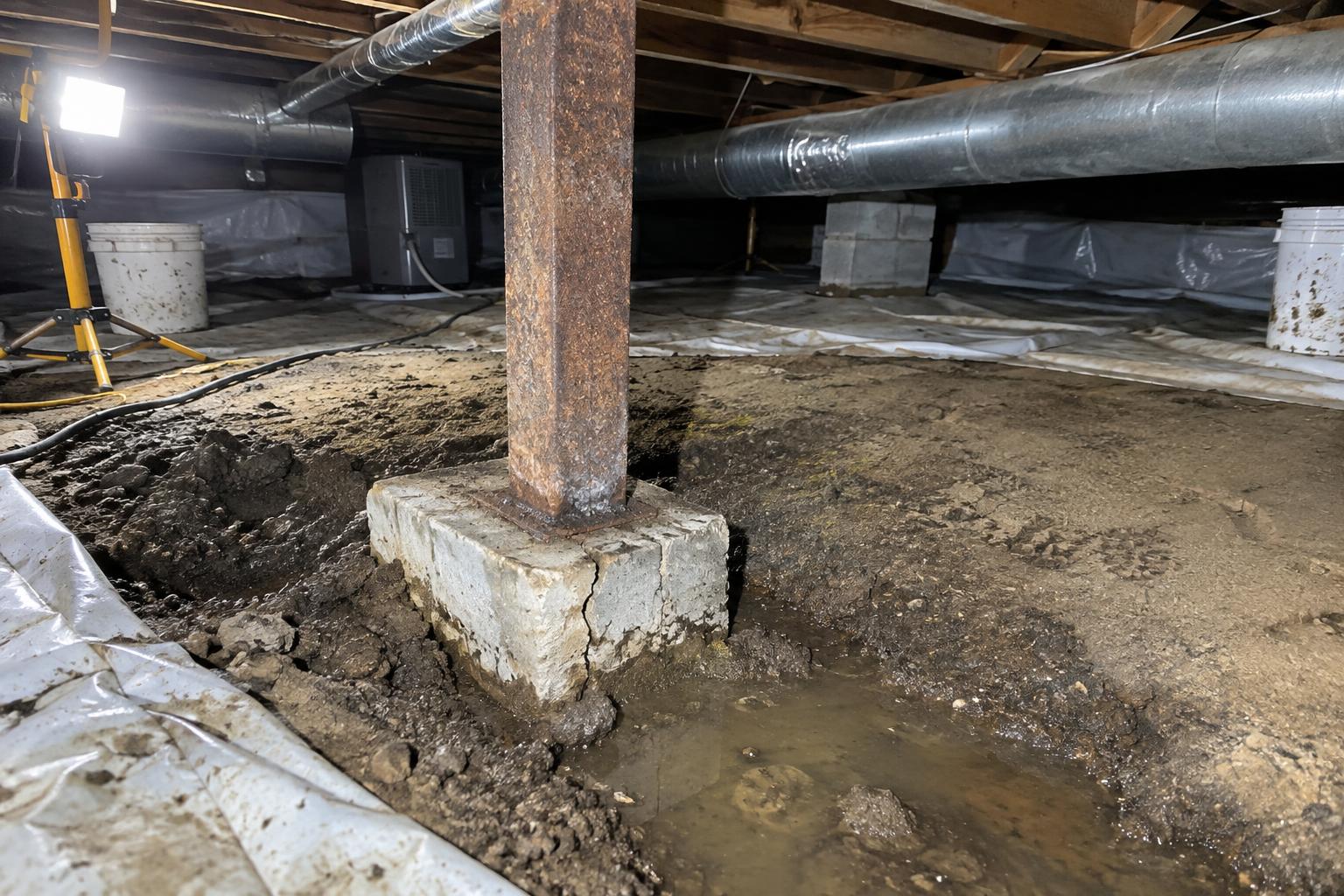
The Real Situation Under Williams Creek Homes
If you live in Williams Creek, your house probably has some age and character to it. Many of these homes sit over a crawl space instead of a full basement, and that space has been working quietly for decades. The trouble is that central Indiana soil does not make crawl spaces easy. The glacial clay under this part of Marion County holds water like a sponge, then swells and shrinks with the seasons. After a heavy spring rain, water finds its way under the house. In winter, freeze-thaw cycles push and pull on footings and supports.
Most homeowners never see what is happening down there. You notice the signs instead. A musty smell in the first-floor rooms. Floors that feel springy or slope toward one corner. Doors that stick in summer and swing free in winter. Higher humidity upstairs than seems normal. These are all clues that the crawl space needs attention.
Why Crawl Spaces Go Bad Here
The biggest enemy is moisture. A bare dirt floor lets ground water evaporate straight up into the wood above it. Open vents, which were standard on older Williams Creek homes, were supposed to dry the space out. In our humid summers they often do the opposite and pull damp outside air in. That moisture settles on cool framing and feeds mold, wood rot, and rust on metal supports.
The second problem is support. Many crawl spaces rely on wood posts or short masonry piers set on small footings. When the clay beneath them stays wet, it loses strength and the footing sinks. When it dries out, it shrinks. Over years of this movement, posts tip, beams drop, and the floor above starts to sag. We see the same soil behavior drive Foundation Repair work on perimeter walls, so it is no surprise the interior supports move too.
How We Repair a Crawl Space
Every job starts with a real inspection. We crawl the whole space, measure floor levels, check framing for rot, and look at where water is entering. Then we build a plan around what your house actually needs rather than a one-size package.
Moisture control usually comes first. We seal the vents and cover the floor and walls with a heavy vapor barrier. This is thick reinforced liner, not plastic sheeting from a hardware store, and we overlap and seal the seams so ground moisture stays out of the air. When water is actively pooling, we add an interior drain line and a sump pump sized for the space. That gives the water somewhere to go during those big spring storms instead of sitting under your floor.
For the structure, we replace rotted wood and set new adjustable steel supports on proper concrete footings. These posts can be fine-tuned, so we lift sagging beams back toward level slowly and carefully. Doing it gradually protects the finishes upstairs. The result is a floor that feels solid again and framing that is dry enough to last. You can see the full scope of our crawl space repair in Williams Creek and how each piece fits together.
Encapsulation and What Changes After
Once the space is dry and supported, encapsulation ties it all together. With the liner sealed, the vents closed, and the pump in place, the crawl space becomes a clean, controlled area instead of an open dirt pit. Many homeowners add a dehumidifier to hold humidity steady year round.
The difference shows up in the living space. The musty smell fades. First-floor rooms feel warmer in winter because cold damp air is no longer rising through the floor. Humidity levels even out upstairs, which helps your HVAC run less. And because the wood is staying dry, you stop the slow rot and rust that quietly weaken a house over time.
Timing and What to Expect
A typical Williams Creek crawl space project takes a few days, depending on size and how much structural work is needed. We protect your landscaping and interior floors, haul out debris, and leave the access point clean. Most of the work happens under the house, so daily life inside stays fairly normal.
The best time to call is when you first notice the signs. Soft floors and musty air do not fix themselves, and the longer moisture sits, the more framing it damages. Catching it early almost always means a smaller, less expensive repair. If you have questions about your own home, call us at 317-251-1935 and we will take a look.
FAQ
We answer the questions Williams Creek homeowners ask us most about crawl spaces below.