
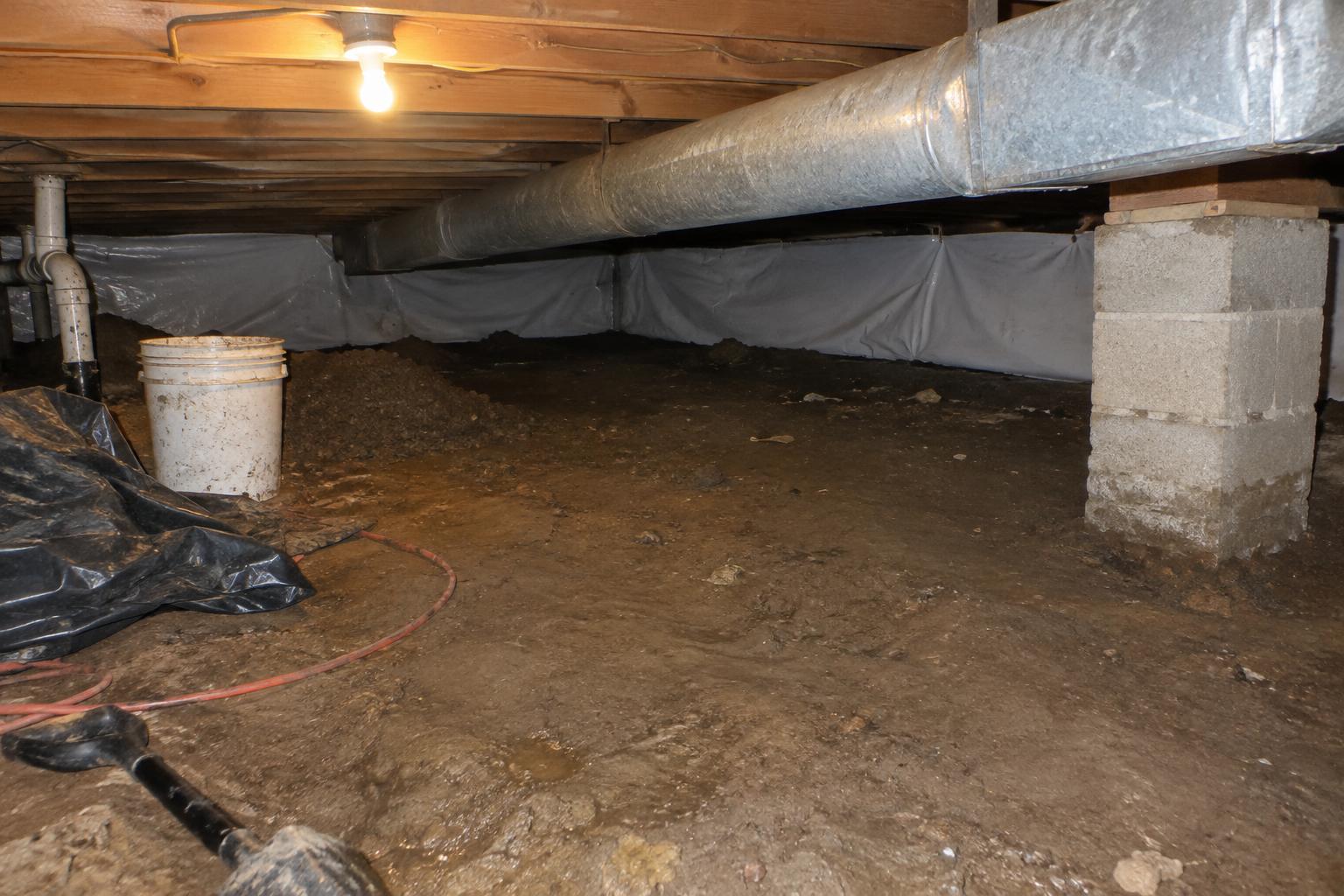
If you live in Carmel and you have noticed a musty smell near the floor registers, or the floor in one room feels a little bouncy, the trouble is often right under your feet. A lot of homes around Hamilton County and the older pockets of Marion County sit over a crawl space. That space does its job quietly for years. Then one spring it starts to hold moisture, and the problems follow.
The soil here is the reason. Central Indiana sits on glacial clay and till that holds water instead of draining it. After a heavy rain, that clay stays wet for days. Add freeze and thaw through the winter, and the ground under your house is always moving a little. A crawl space feels every bit of it.
Why Carmel Crawl Spaces Get Wet
Most crawl space moisture in this area comes from a few predictable places. Grading around the house slopes toward the foundation instead of away from it. Downspouts dump rain right at the corner of the home. Groundwater pushes up through a bare dirt floor. And old foundation vents let humid summer air pour in, where it hits cool surfaces and turns to condensation.
Once the dirt and wood stay damp, you get the chain of issues homeowners call us about. Wood rot in the joists and the sill. Mold on the underside of the subfloor. Rust on ductwork and metal straps. A damp smell that works its way up into the living space because air in a house moves upward. Carmel homes with finished basements or newer additions over a crawl space tend to notice the odor first.
What Crawl Space Repair Involves
Good crawl space repair in Carmel starts with finding where the water comes from, not just drying what you can see. We look at the grade outside, the gutters and downspouts, the vents, and the dirt floor itself. Then we build the fix around what we find.
The core of most repairs is encapsulation. We seal the floor and walls with a heavy vapor barrier, usually a thick white liner, and lap and seam it so moisture from the soil stays trapped under the plastic. Where groundwater collects, we add a drainage system with a low profile sump pit and a pump that moves water out and away from the house. A dehumidifier sized for the space keeps the air dry year round, which protects the wood and knocks down the smell.
On the outside, we handle the water before it ever reaches the crawl. That can mean extending downspouts well past the foundation, correcting the slope of the soil near the walls, or adding a drain line to carry runoff away. On clay that holds water, moving that water matters as much as sealing the inside.
Sagging Floors and Crawl Space Supports
Moisture is one half of the story. The other half is support. When soil shrinks and swells with the seasons, or when a wood support post sits on a small footing that was never big enough, the floor above starts to settle. You feel it as a slope, a soft spot, or a gap opening between the baseboard and the floor.
We correct that with adjustable steel support jacks set on proper footings. They take the load off tired or rotted posts and let us bring a sagging floor back toward level in controlled stages. If joists have rotted from years of damp, we sister new lumber alongside them so the floor carries its load again. This is structural work, and it ties into the same ground movement that drives Foundation Repair on homes across Carmel and Westfield.
Why It Pays to Fix It Right
A dry, sealed, supported crawl space does more than stop a smell. It protects the framing that holds up your house. It makes the floors above more comfortable because you are no longer pulling damp, cool air into the rooms. It helps the home feel easier to heat and cool. And when it comes time to sell, a clean encapsulated crawl space is something a buyer and an inspector both notice.
The freeze-thaw cycle and the wet clay are not going anywhere in central Indiana. The point of the repair is to control the water and steady the support so the seasons stop taking a toll on your home. Done well, it is work you do once and then stop thinking about.
If your crawl space smells musty, feels damp, or sits above a floor that is starting to slope, it is worth a look before the wood takes more damage. Call Michaelis Foundation Solutions at 317-251-1935 to set up an inspection.
Signs It Is Time to Call
Watch for a musty odor near floor vents, condensation on ducts or pipes, standing water or soft mud after rain, rust on metal connectors, and floors that feel springy or uneven. Any one of these is a signal that the crawl space needs attention. Catching it early usually means a simpler, smaller repair.