
If you own an older home in Williams Creek, you have probably learned to watch the basement after a hard rain. The water shows up in familiar spots. A damp line along the bottom of a block wall. A puddle near the floor drain. A musty smell that settles in during late March when the ground thaws and the sky opens up. These are not random problems. They come from the soil and the weather this part of central Indiana deals with every year.
This guide walks through why Williams Creek basements get wet and what it actually takes to keep them dry. We handle basement waterproofing in Williams Creek and the surrounding north-side neighborhoods, so these are the patterns we see on real jobs.
Why Williams Creek Basements Take On Water
The ground under most of Marion and Hamilton counties is glacial clay and till. Clay is dense, and it holds water instead of letting it drain away. When spring rain soaks the yard, that water sits against your foundation and presses on the walls and the floor. Engineers call that hydrostatic pressure. You just call it a wet basement.
Winter adds a second problem. Water in the soil freezes, expands, then thaws, over and over through the season. That freeze-thaw cycle works on foundation walls like a slow lever. Block walls take the worst of it because the hollow cores and the mortar joints give water easy paths. Poured walls hold up better but still crack as the soil moves.
Older Williams Creek homes often have a mix of conditions too. A finished basement over an aging block wall. A crawl space off to one side with a dirt floor. Each area needs its own look.
Signs The Water Is Getting In
Some signs are obvious, like standing water on the floor. Others build slowly and are easy to miss. Watch for these.
- White chalky residue on block or concrete, called efflorescence, which means water is moving through the wall - Peeling paint or a stained line a few inches up the wall - Horizontal cracks, or a wall that looks like it is leaning inward at the middle - A damp, earthy smell that never fully clears - Rust at the base of steel posts or appliances
Bowing walls deserve special attention. When a block wall starts to lean in, the soil pressure has already won part of the fight. That is a structural issue, not only a water issue, and it needs bracing or anchoring along with drainage.
How We Keep The Water Out
There is no single product that fixes a wet basement. Good waterproofing manages water from the yard all the way to the discharge point. We look at the whole path.
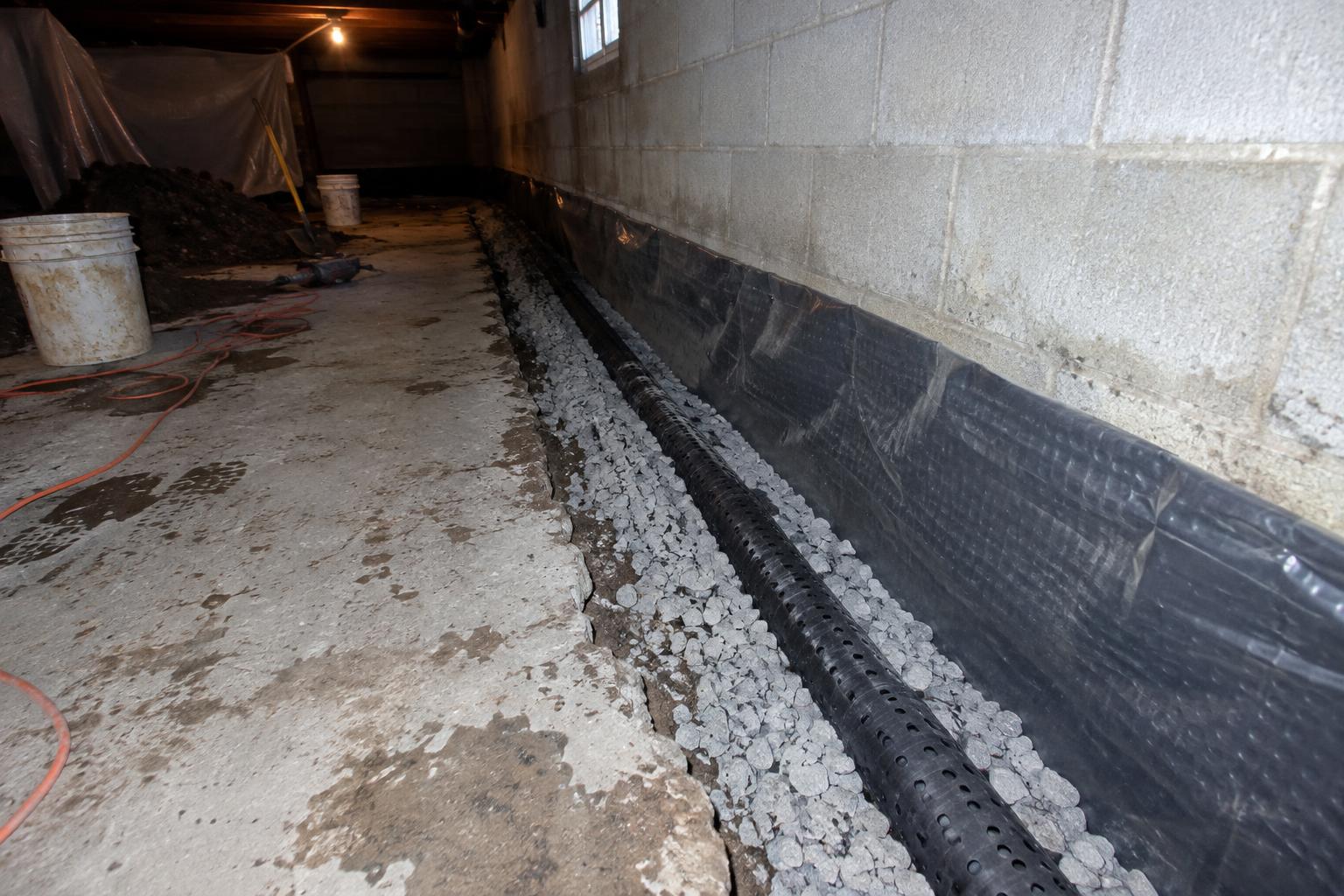
Interior drainage is the core of most repairs we do here. We cut a channel in the slab along the inside of the footing, set perforated pipe in clean gravel, and route it to a sump pit. The pipe collects water that reaches the base of the wall and carries it away before it can pool on the floor. We patch the slab with fresh concrete when the pipe is in place.
The sump system does the heavy lifting during storms. A solid pump, a check valve so water cannot flow back, and a sealed lid make the difference during a heavy spring night. We discharge the water well away from the house so it does not circle right back into the soil.
For walls that leak but are not failing, we seal cracks and add a vapor barrier that drains any seepage down into the new drain line. When walls are bowing, we add carbon fiber straps or steel braces before we worry about cosmetics.
Drainage Starts Outside
A lot of basement water problems begin at the gutters. If your downspouts dump right next to the foundation, the soil there stays saturated. We check that water is carried several feet out, and we look at grading so the yard slopes away from the house rather than toward it. Small changes outside take real pressure off the basement.
If part of your home sits over a crawl space, that area matters too. Damp crawl space dirt feeds moisture and smell into the whole house. Our Crawl Space Repair work ties into the same drainage plan so the two spaces are not fighting each other.
What To Expect From The Process
We start with an inspection, not a sales pitch. We walk the basement, check the walls and floor, look at the grading and downspouts, and ask when and where you see water. From there we lay out what the problem is and what the fix involves.
Most interior drainage and sump installs take a few days, depending on the size of the basement and how much slab we open. We clean up as we go, and we explain the maintenance your system needs, which is usually just testing the pump and keeping the discharge clear.
The goal is a basement you stop thinking about. No watching the forecast. No towels by the stairs. Just a dry space that stays dry through Indiana's wet seasons.